

The Complete Standing Desk Guide for Kenyans: How to Sit, Stand, and Work Better
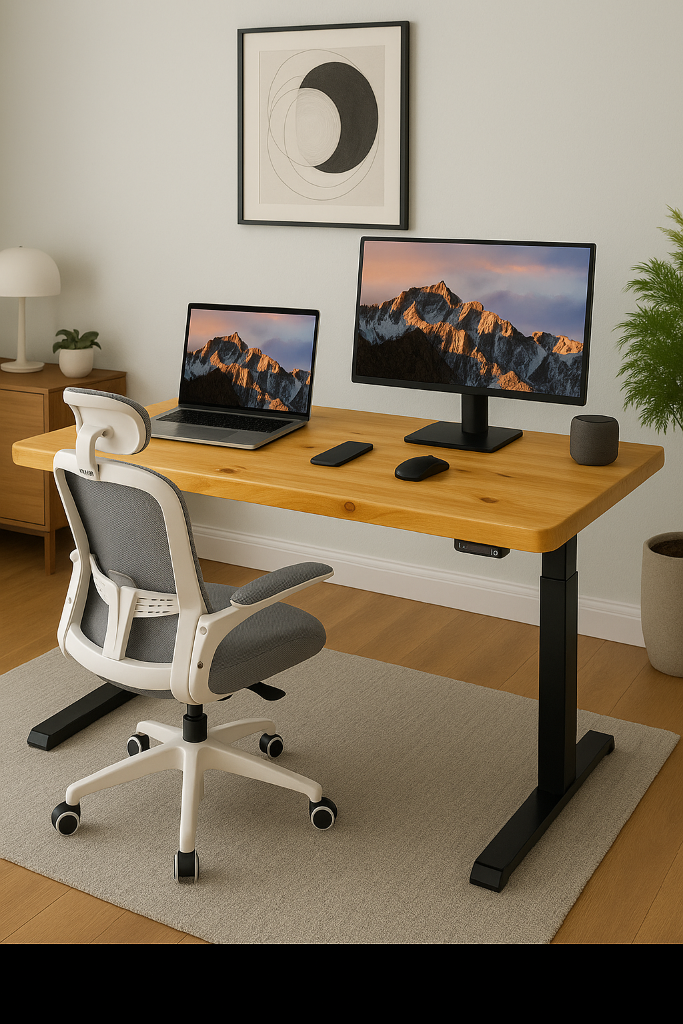
Standing desks have become increasingly popular among remote workers, pastors, software developers, designers, traders, architects, and professionals who spend long hours at a computer.
However, many people misunderstand what a standing desk is designed to do.
A standing desk is not a device that allows you to stand all day. It is a tool that helps you move more frequently throughout the workday.
Research increasingly shows that the healthiest workspace is not one where you sit all day or stand all day. The healthiest workspace is one where you regularly change positions and keep your body moving.
At Crafty KE, we believe that the best posture is your next posture.
This guide explains everything you need to know about using a standing desk — proper sitting and standing habits, workstation ergonomics, and how to create a healthier work routine. If you are still deciding which desk to buy, see our complete buyer's guide to the best standing desks in Kenya and our breakdown of the pros and cons of electric standing desks.
What Is a Standing Desk?
A standing desk — also known as a height-adjustable desk or sit-stand desk — is a desk that allows you to easily switch between sitting and standing positions. Unlike traditional desks, standing desks can be adjusted throughout the day to support healthy posture changes and movement.
Modern standing desks may be manually adjustable or powered by electric motors. For a deep dive into the different types available in Kenya — including electric, dual-motor, and single-motor options, plus pricing and sizes — see our standing desk buyer's guide.
The purpose is simple:
- Reduce prolonged sitting
- Encourage movement
- Improve comfort
- Support healthy work habits
- Create a more flexible workspace
The Biggest Myth About Standing Desks
Many people believe standing desks are meant to eliminate sitting. This is not true.
Standing all day can be just as problematic as sitting all day. The goal is movement.
A standing desk is most effective when used to alternate between sitting, standing, stretching, and walking throughout the day. Think of your standing desk as a movement desk rather than a standing desk.
Why Sitting All Day Can Be a Problem
Modern work often requires hours of computer use. Whether you are:
- Writing sermons
- Coding software
- Managing an online business
- Trading financial markets
- Designing graphics
- Attending online meetings
You may spend most of the day seated.
Prolonged sitting can contribute to:
- Neck discomfort
- Back discomfort
- Shoulder tension
- Reduced movement
- Fatigue
- Poor posture habits
The problem is not necessarily sitting itself. The problem is staying in one position for too long.
Why Standing All Day Is Not the Solution
Some people buy a standing desk and attempt to stand for several hours straight. This approach usually fails.
Standing continuously may lead to:
- Foot fatigue
- Leg discomfort
- Lower back strain
- Reduced concentration
Healthy work involves movement, not permanent standing. For a balanced look at the benefits and drawbacks of electric standing desks, read our article on the pros and cons of adjustable standing desks.
The Crafty 20-8-2 Method
One of the most practical frameworks for desk workers is the 20-8-2 approach.
Every 30 minutes:
- Sit for 20 minutes
- Stand for 8 minutes
- Move for 2 minutes
The movement portion can include:
- Walking to refill water
- Stretching
- Taking a short walk
- Performing mobility exercises
Repeat this cycle throughout the day. This simple habit encourages regular movement without disrupting productivity.
How Often Should You Change Positions?
Most people benefit from changing positions every 30 to 60 minutes.
Good examples include:
- Sitting during focused work
- Standing during email sessions
- Standing during phone calls
- Standing during virtual meetings
- Walking briefly between tasks
Frequent posture changes are more important than achieving a perfect posture.
How to Use a Standing Desk for the First Time
If you are new to standing desks:
Week 1: Stand for 10 minutes every hour.
Week 2: Stand for 15 to 20 minutes every hour.
Week 3: Stand for 20 to 30 minutes every hour.
Week 4: Develop a comfortable rhythm between sitting and standing.
Avoid trying to stand for multiple hours immediately. Gradual adaptation works best.
Correct Standing Desk Height
Your standing desk should allow:
- Elbows bent approximately 90 degrees
- Relaxed shoulders
- Neutral wrists
- Straight forearms
Your keyboard and mouse should be positioned at elbow height. If your shoulders are raised or your wrists are bent upward, your desk height likely needs adjustment.
Our Adjustable Height Electric Standing Desk features memory presets — save your perfect sitting and standing heights and switch between them with one touch.
Correct Monitor Height
Many people focus on desk height and ignore monitor position. Monitor placement is critical.
Ideally:
- The top of the screen should be near eye level
- Your neck should remain neutral
- You should not need to look downward for long periods
For laptop users, a laptop stand and external keyboard are strongly recommended.
Why Movement Matters More Than Standing
Movement improves circulation and helps prevent stiffness.
Simple activities can make a difference:
- Walking around the room
- Stretching
- Changing posture
- Climbing stairs
- Refilling your water bottle
Movement should be viewed as part of your work routine rather than an interruption.
Standing Desk Habits That Actually Work
The most successful standing desk users build triggers into their day.
Examples:
- Stand whenever a meeting begins
- Stand after every phone call
- Stand after completing a major task
- Stand while reading documents
- Stand while planning your day
These small habits create consistency.
Do You Need an Anti-Fatigue Mat?
An anti-fatigue mat can improve comfort for people who stand frequently.
Benefits include:
- Reduced foot fatigue
- Improved comfort
- Encouragement of subtle movement
Supportive footwear also helps. Pair your standing desk with our Executive Ergonomic Office Chair for comfortable, well-supported sitting during your seated intervals.
Can a Standing Desk Improve Productivity?
Many users report:
- Better focus
- Increased alertness
- More energy during the afternoon
- Improved comfort
However, the biggest productivity benefit often comes from increased movement rather than standing itself.
Standing Desks for Different Professionals
Standing Desks for Pastors
Pastors often spend hours:
- Preparing sermons
- Conducting research
- Reading commentaries
- Writing study notes
A standing desk can make long preparation sessions more comfortable by encouraging regular movement.
Standing Desks for Software Developers
Developers frequently spend entire workdays at a computer. A height-adjustable desk makes it easier to switch positions without interrupting workflow.
Standing Desks for Remote Workers
Remote workers often lack the movement naturally built into traditional office environments. A standing desk helps create movement opportunities throughout the day.
Standing Desks for Designers
Designers often benefit from standing while reviewing concepts, sketching ideas, or collaborating with clients.
Common Standing Desk Mistakes
Avoid these mistakes:
- Standing all day
- Sitting all day
- Ignoring monitor height
- Ignoring keyboard position
- Starting too aggressively
- Forgetting movement breaks
- Using poor footwear
- Locking the desk at one height permanently
Why a Height Adjustable Desk Is Different from a Traditional Desk
Traditional desks encourage one posture. Height-adjustable desks encourage movement.
That difference is often the reason professionals choose standing desks for modern workspaces. Explore our full range of home office desks and standing desks to find the right fit for your workspace.
Frequently Asked Questions About Standing Desks
Are standing desks worth it? Yes, when used correctly. The greatest benefit comes from regularly alternating between sitting, standing, and moving. See our buyer's guide for detailed recommendations.
How many hours should I stand per day? There is no universal number. Most experts recommend alternating positions throughout the day rather than targeting a specific standing duration.
Can a standing desk cure back pain? No. Standing desks are not medical treatments. They may help reduce discomfort by encouraging movement and posture variation.
Is standing better than sitting? Neither is best when done continuously. Alternating between positions is generally the healthier approach.
Can I stand all day? It is not recommended. Movement and posture changes are more beneficial than standing continuously.
How often should I adjust my standing desk? Every 30 to 60 minutes is a good starting point.
What is the best standing desk height? Your elbows should remain at approximately 90 degrees with relaxed shoulders.
What is the correct monitor height? The top of the monitor should be approximately at eye level.
Should I use a standing desk with a laptop? Yes, but an external keyboard and laptop stand are strongly recommended.
Do standing desks improve productivity? Many users report improved focus and alertness, particularly during long work sessions.
Do standing desks burn calories? Standing generally burns slightly more calories than sitting, but a standing desk should not be viewed as a weight-loss tool.
Should I wear shoes while standing? Supportive footwear is usually more comfortable for extended standing sessions.
Do I need an anti-fatigue mat? Not necessarily, but many users find them helpful.
Are standing desks good for home offices? Yes. They are especially useful for remote workers who spend many hours at a computer.
Can students use standing desks? Absolutely. Students can benefit from the same posture variation and movement opportunities as professionals.
What is the best standing-to-sitting ratio? A practical starting point is the 20-8-2 method: 20 minutes sitting, 8 minutes standing, 2 minutes moving.
Can standing desks replace exercise? No. Regular exercise remains essential for overall health.
How long does it take to adapt to a standing desk? Most users adjust within two to four weeks when transitioning gradually.
Should I stand during meetings? Many users find standing during virtual meetings comfortable and productive.
Can a standing desk help with energy levels? Many people report feeling more alert when alternating positions throughout the day.
Final Thoughts
A standing desk is not about standing. It is about movement.
The healthiest workspace is one that encourages regular posture changes throughout the day. Whether you are a pastor preparing sermons, a software developer writing code, a designer creating visual work, or a remote professional building a business from home, a height-adjustable desk can help create a healthier and more flexible work routine.
The goal is simple:
Sit. Stand. Move. Repeat.
Ready to upgrade your workspace? Explore our 6ft Electric Standing Desk with Dual Drawer Storage — the best sit-stand desk with storage in Kenya — or browse our full office furniture collection.
Questions? Message us on WhatsApp: +254 785 322 330
